
From a vague prompt to a good answer
How people usually get good answers out of an AI chatbot – and which of those steps YellowNotes AI takes care of for you, with the judgment of people who know the subject.
1. The usual way: four steps
With an ordinary AI chatbot built on a large language model (LLM), few people get a really good answer at the first attempt. Most work their way there in steps:
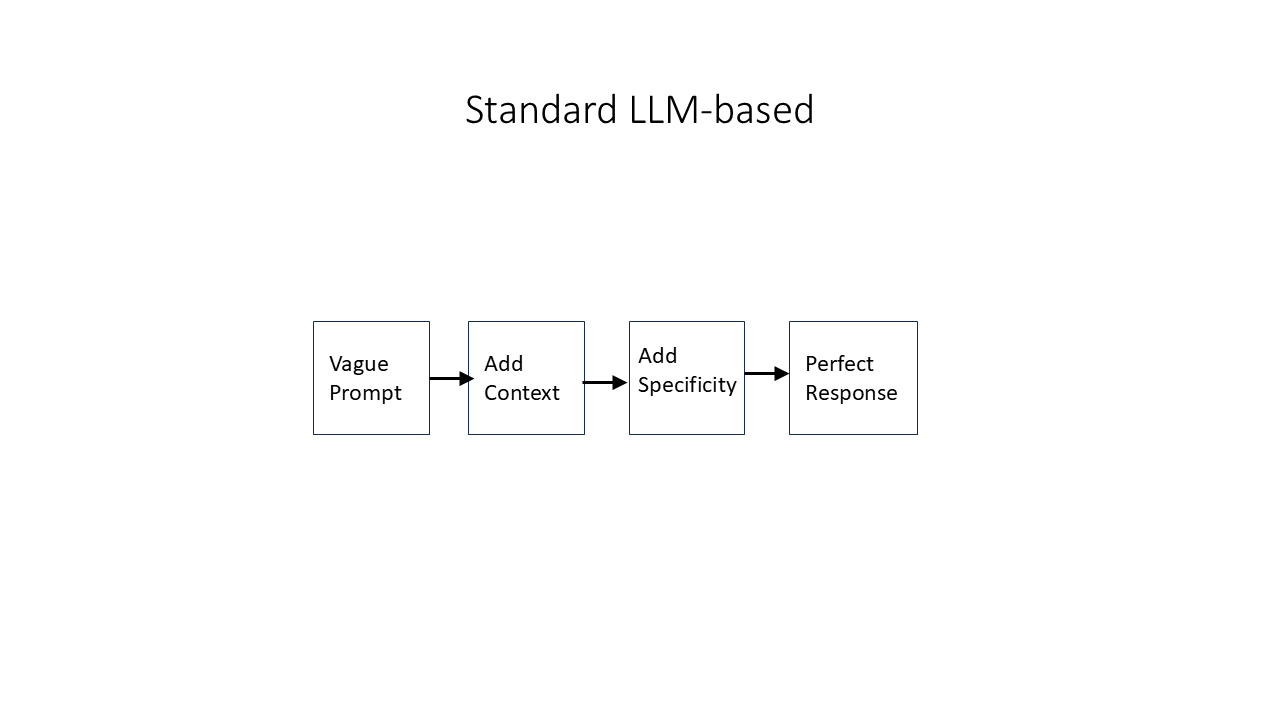
- Vague prompt. You ask in general terms. The answer is just as general: correct enough, but not about your situation.
- Add context. You explain who you are, what your situation is, what you already know and which sources you trust – so the model knows what the question is really about.
- Add specificity. You say exactly what you need: what matters and what doesn't, what to leave out, how detailed the answer should be.
- Good answer. Only now does the answer fit what you were actually looking for.
The two middle steps are the hard part. They take several rounds of trial and error, and they require judgment: knowing which context matters and what a sufficient answer looks like. If you are new to a subject, that is exactly the knowledge you don't have yet – which is often why you are asking in the first place.
2. With YellowNotes AI: people provide the middle steps
With YellowNotes AI you still start with your own question – it may be as vague as you like. The context and the specificity come from the topic you chat with, and they come from people who know the subject:
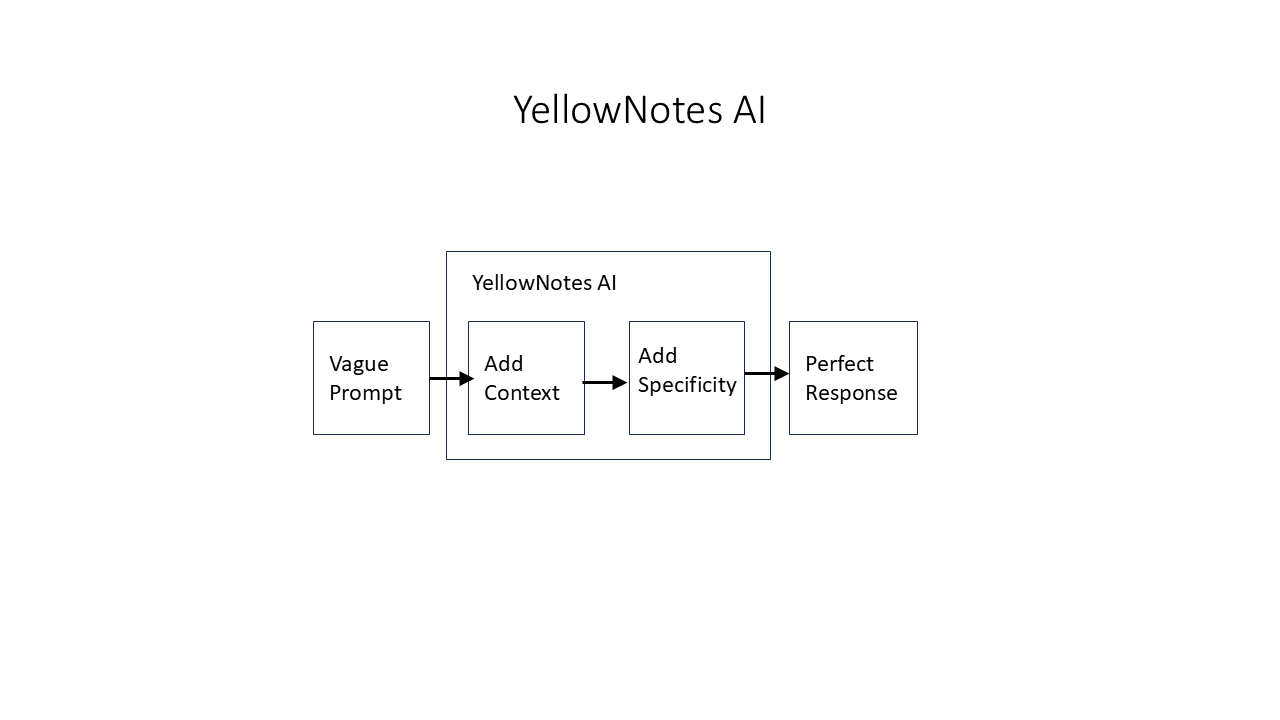
- Context – from the topic's notes. The creator of a topic, and the people who post to it, pin notes to the web pages they consider worth knowing, mark the passages that matter and add their own comments. When you ask a question, the answer is based on those notes and the pages they are pinned to – sources people with knowledge of the subject have chosen, rather than whatever the model happens to know.
- Specificity – from the topic's instructions. The topic's owner sets the instructions the AI follows for that topic: what matters in this field, which sources to rely on, and how to answer. You get that guidance without having to know it, or write it, yourself.
The result: you can ask a vague question and still get an answer shaped by human judgment – the judgment of the people behind the topic, who know what matters and what is enough.
3. Try it
- Get started with topics – describe what you want to find out and get topics suggested.
- AI chat – pick up to two of the topics you subscribe to and ask your question.
- On a topic's own page you can also chat with that topic directly, once you subscribe to it.
See also the reference overview and the explanation pages.